Some trips are about checking destinations off a list. Others are about the moments that happen between those destinations—the people you share them with, the unexpected problems that become funny stories later, the meals that somehow taste better after a long day on the bike, and the memories that stay with you long after you return home.
Our five-week European adventure was planned around cycling and friends. We wanted to ride some of the legendary climbs of the Giro d’Italia and Tour de France, spend time with people we love, and experience the Tour de France in person.
What we didn’t expect was how quickly the trip would become about much more than the riding.
There were quiet roads through mountain villages, long climbs that seemed to have no end, international borders crossed on two wheels, bakeries, cheese shops we couldn’t pass without entering, and dinners that sometimes involved a restaurant—and sometimes involved a grocery store and a picnic because everything else was closed.
We rode roads the world’s greatest cyclists have raced over for decades. Then, just days later, we stood beside those same roads and watched the Tour de France come flying past.
And through it all, we got to share the experience with friends.
Five weeks later, we came home with tired legs, a lot of elevation gain, and far more stories than we could have planned.
The Trip at a Glance
- 🚴 Five weeks traveling through Europe
- 🇫🇷🇮🇹 Seven days of bikepacking through France and Italy
- 🏔️ Climbs including Izoard, Agnel, Finestre, Mont Cenis, Galibier, Ventoux, Télégraphe, and more
- 🚵 Riding with friends in Catalonia and Grenoble
- 🚴 Watching multiple stages of the Tour de France
- 🍷 Countless meals, bakeries, cheese stops, and glasses of local wine
When the Tour de France announced that its 2026 Grand Départ would begin in Barcelona for the first time ever, and that Stage 3 would pass directly through Puigcerdà, near our friend Gemma’s hometown, the decision was easy. We had already fallen in love with Catalonia on previous visits. This time, we would return with road bikes, spend time with good friends, and explore some of the incredible roads stretching through northeastern Spain, Andorra, and the French Pyrenees by bike.
What followed were ten days filled with mountain climbs, medieval villages, spectacular food, mechanical disasters, the world’s greatest bike race—and plenty of laughter.
But the best part was sharing it all with friends.
A Medieval Start in Besalú
After landing in Barcelona, we made the two-hour drive north to Besalú, a remarkably preserved medieval town surrounded by the rolling countryside of Catalonia.
John and Gemma had rented a wonderful apartment in the former Monastery of Sant Pere de Besalú, a building founded in 977 AD that has since been converted into accommodations. Just outside our door was Besalú’s famous medieval bridge, whose origins date back centuries and which has survived floods, wars, and repeated reconstruction.
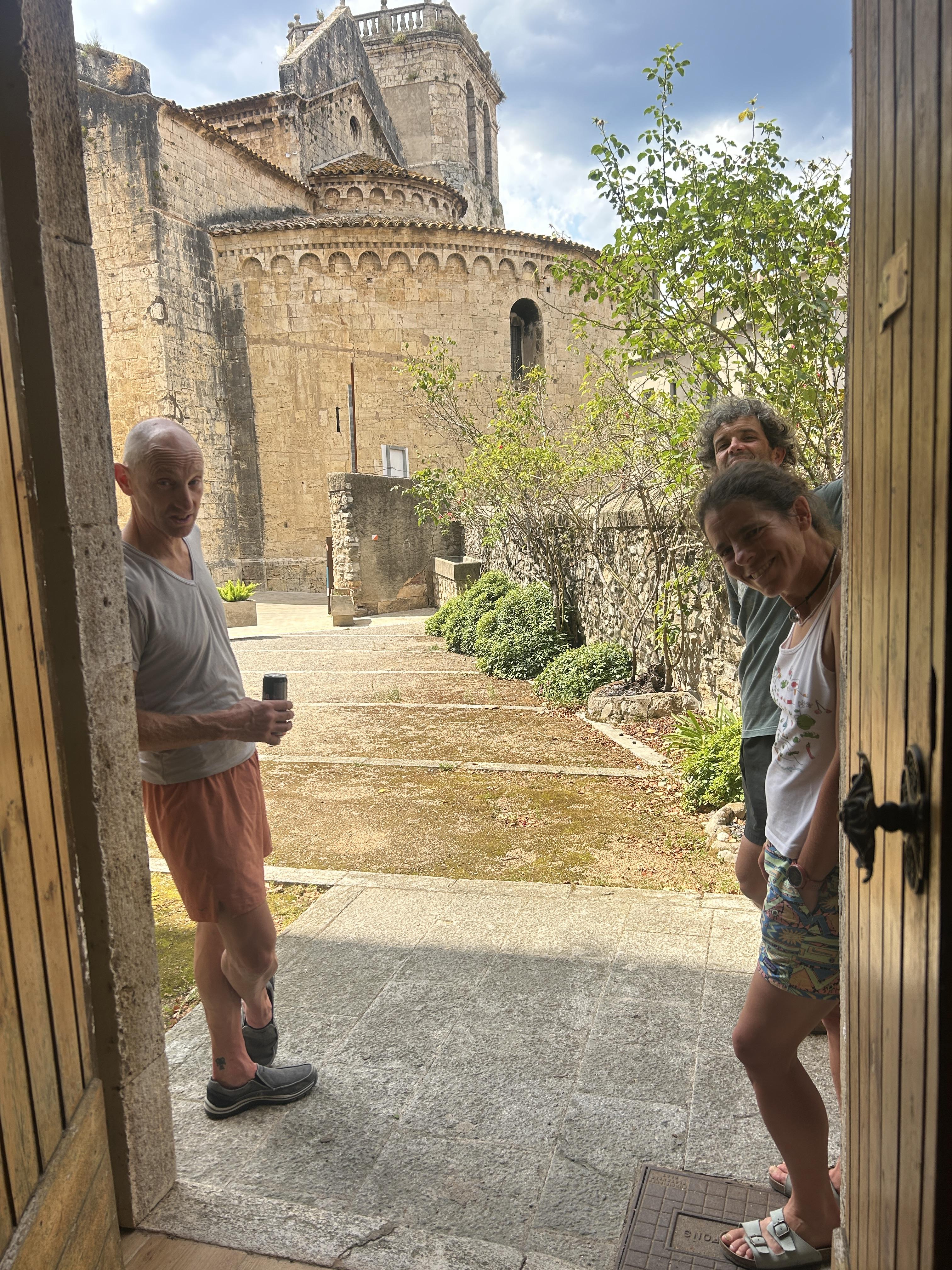
Once the bikes were assembled, we couldn’t resist heading out for a short spin.
It didn’t take long to remember why we love this part of Spain. Quiet roads wound past stone farmhouses, ancient churches, and olive groves. There was almost no traffic, and every few minutes another postcard-like view appeared around a bend. Eventually, the road brought us back to Besalú.
That evening, we wandered through the narrow cobbled streets, crossed the medieval bridge several times—because once clearly wasn’t enough—and stopped at the local market for groceries. Back at the apartment, we opened some Catalan beer, cooked dinner together, and caught up on everything that had happened since we’d last seen one another.
Climbing Above Catalonia
Our first full day gave us a taste of what we’d come for. We headed into the hills toward Mare de Déu del Mont, climbing through quiet countryside toward the mountaintop sanctuary. The road seemed to get steeper with every turn, but the views kept getting better.
After the climb came the reward: a long, winding descent followed by another ride through tiny villages including Tortellà and Sadernes. Everywhere we looked there were reminders of just how old this landscape is—Romanesque churches, stone bridges, farmhouses, and villages that seemed to have changed very little over the centuries. By the time we returned to Besalú, we’d worked up a serious appetite.
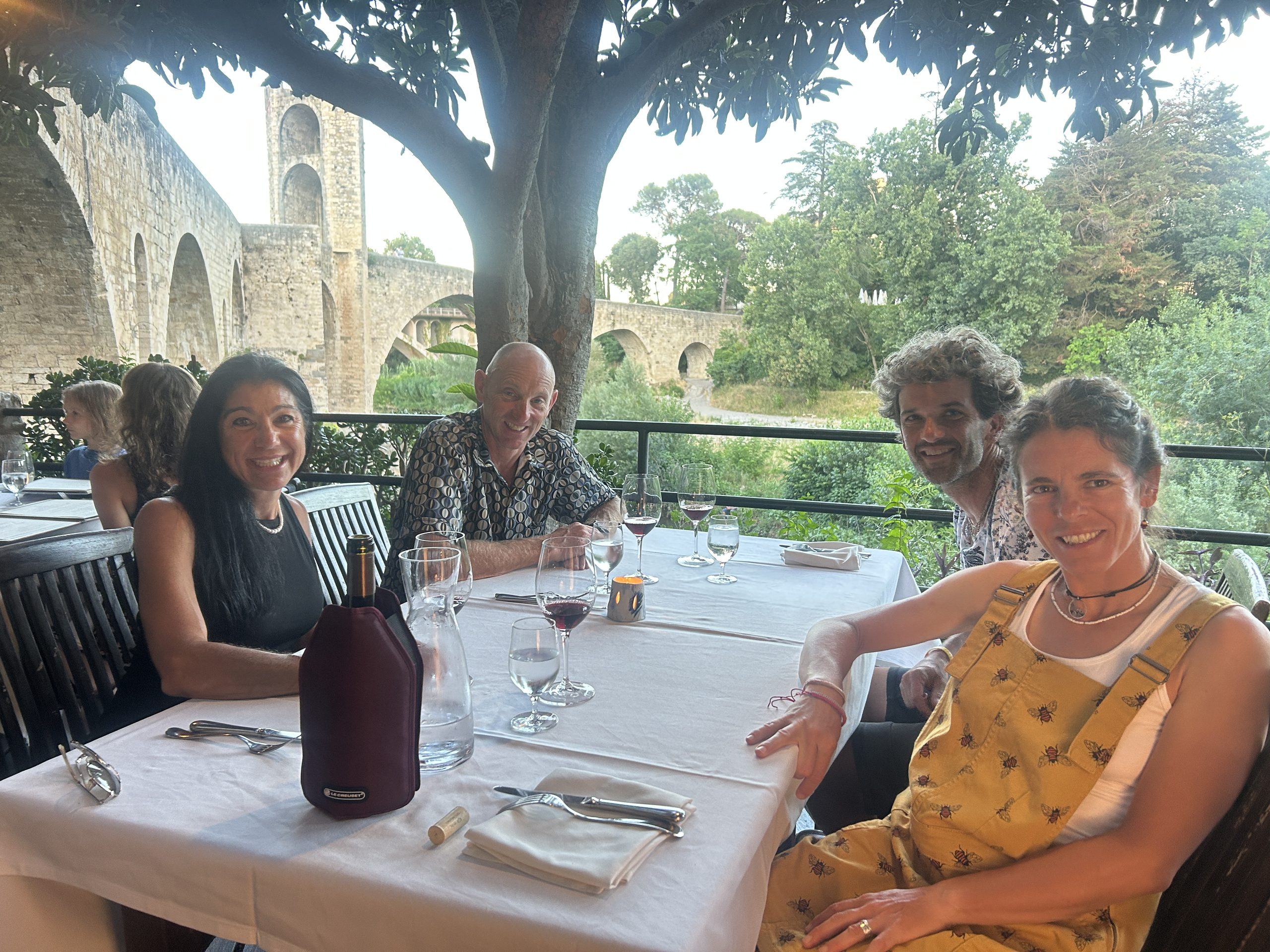
That evening, we traded our cycling shoes for something a little more civilized and had dinner at Pont Vell, a Michelin restaurant overlooking the medieval bridge. It was one of those meals where everyone kept saying, “This is amazing,” and then the next course arrived and somehow managed to be even better. Gazpacho, fish fritters, rabbit, fideuà, and an unforgettable almond cake showcased the region’s flavors. It wasn’t just one of the best meals of the trip, it was one of the best meals we’ve had anywhere.
When the Bikes Had Other Plans
The next day, we left Besalú and headed toward the Pyrenees. Our target was Coll d’Ares, a historic mountain pass that crosses the border between Spain and France. The route was exactly what we’d hoped for: long climbs, sweeping descents, tiny mountain villages, beautiful scenery, and remarkably little traffic. The riding was fantastic. The bikes, however, had other ideas. Emily’s shifting problems had been getting progressively worse, and eventually the chain jumped into the spokes, bending the derailleur hanger. We had gone from enjoying a beautiful mountain ride to wondering how we were going to get the bike fixed.
Then, after the ride, We heard a tire blow and Chad discovered that his front tire had completely lost its air. The culprit was rim-tape failure caused by the extreme heat. Had it happened five minutes earlier, the result could have been a devastating high-speed crash. Instead, we were incredibly fortunate to discover it after the ride.
We stopped into a bike shop in Puigcerdà, where a mechanic performed what felt like a minor miracle. He replaced the rim tape, added tire sealant, repaired Emily’s drivetrain, and got both bikes back in working order. The bill? €30. We left with two functioning bikes and one more story to add to the trip.
That evening, we arrived at Gemma’s home in Guils de Cerdanya, where we’d spend the next several days exploring a region she knows intimately. We then headed into Puigcerdà for one of the local summer traditions: pintxos. For a few weeks each summer, participating restaurants offer a small tapa paired with a glass of wine. It was exactly the kind of evening we had hoped this trip would include—good food, good wine, and good friends, with the mountains waiting outside for the next morning.
The Roads Only Locals Know
One of the most memorable rides of the entire trip wasn’t one of the famous climbs, it was the ride Gemma took us on. Because she had lived and worked in the area, she knew roads we never would have found on our own. She led us through the Cerdanya Valley, linking together quiet farm roads and little villages where the only traffic seemed to be the occasional tractor.
We passed Romanesque churches more than a thousand years old, crossed stone bridges, and rolled through villages that seemed almost untouched by time. There was no famous summit waiting at the end. No Tour de France sign. No crowds, just beautiful roads through a beautiful part of the world. Those were some of our favorite kilometers of the trip. They were roads the locals ride and we got to ride them too.
The Tour Comes to Barcelona
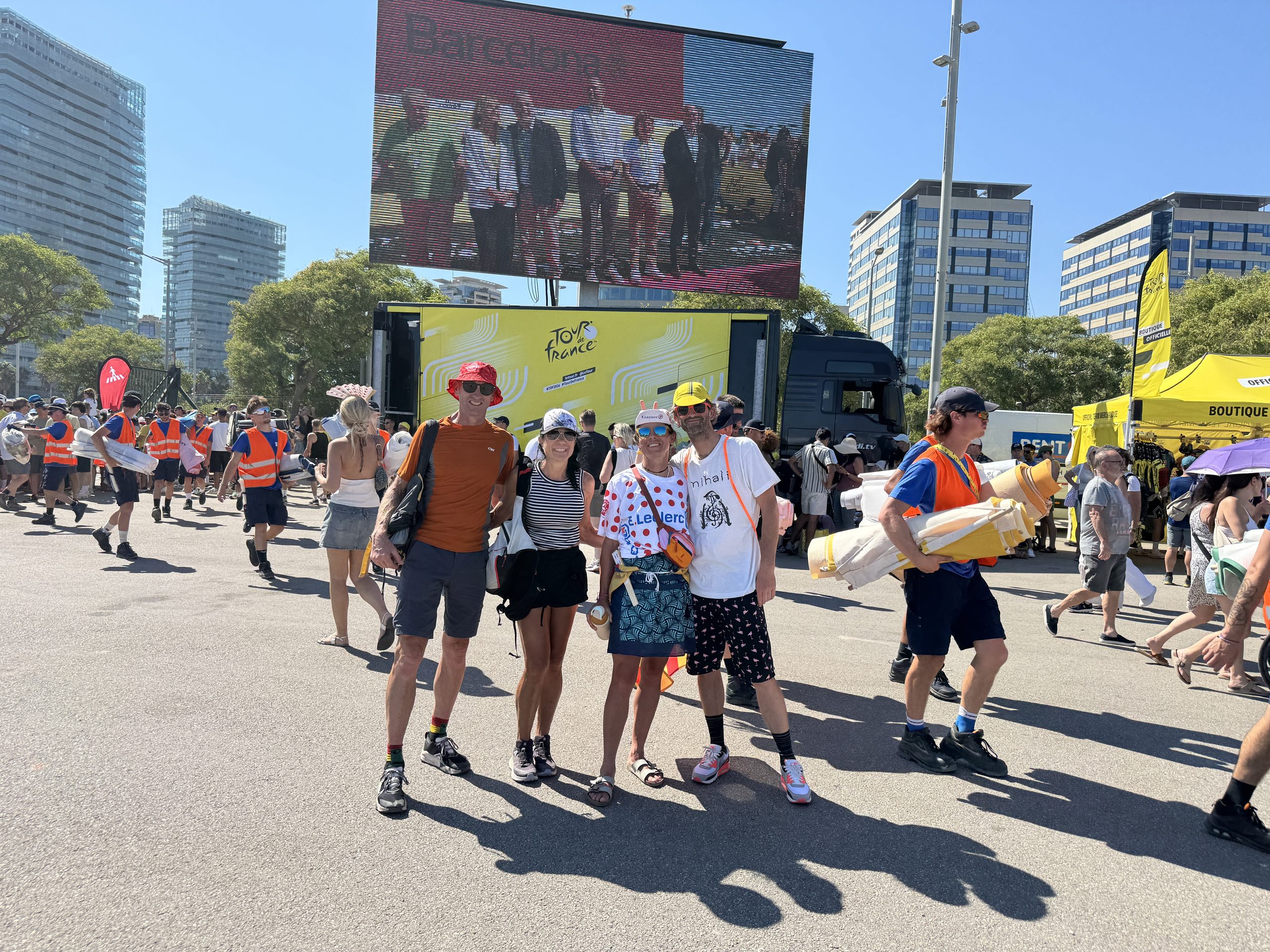
Of course, the Tour de France was one of the reasons we had planned the trip in the first place. In 2026, the race made history with its first-ever Grand Départ in Barcelona. Seeing the Tour on television is exciting. Standing beside the road as the riders come flying past is something completely different.
We spent time wandering through the team village, surrounded by enormous team buses and support vehicles that looked more like Formula 1 garages than cycling equipment. Mechanics worked with incredible precision while riders casually rolled around on their warm-up laps only a few feet away.
We found a spot on a corner where the riders swept through at nearly 50 km/h, holding their formation with almost unbelievable precision. From the television, you just can’t grasp how fast professional cycling is. Standing a few feet away, you feel it. The sound arrives first. Then suddenly the entire peloton is there—and just as quickly, it’s gone.
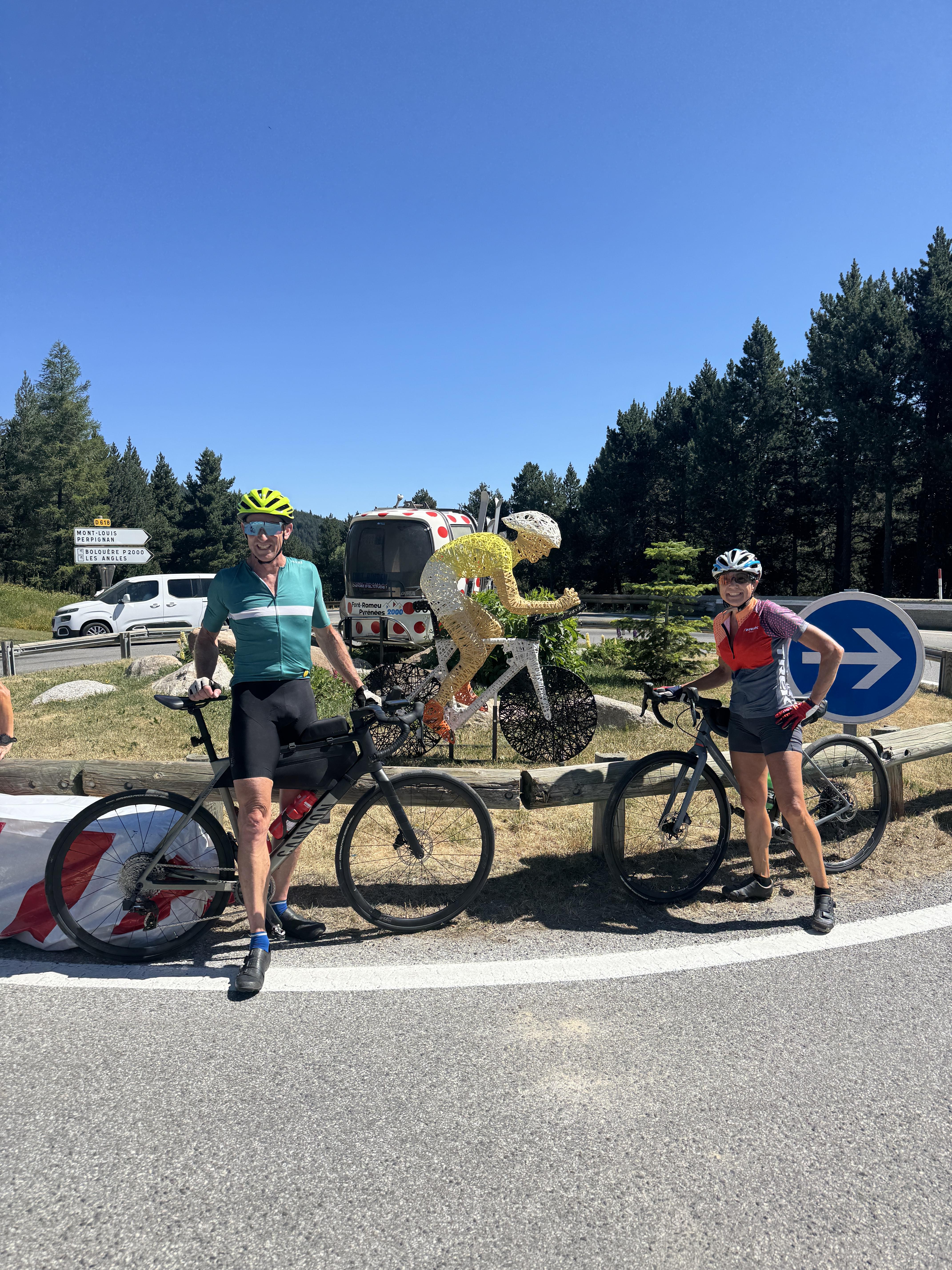
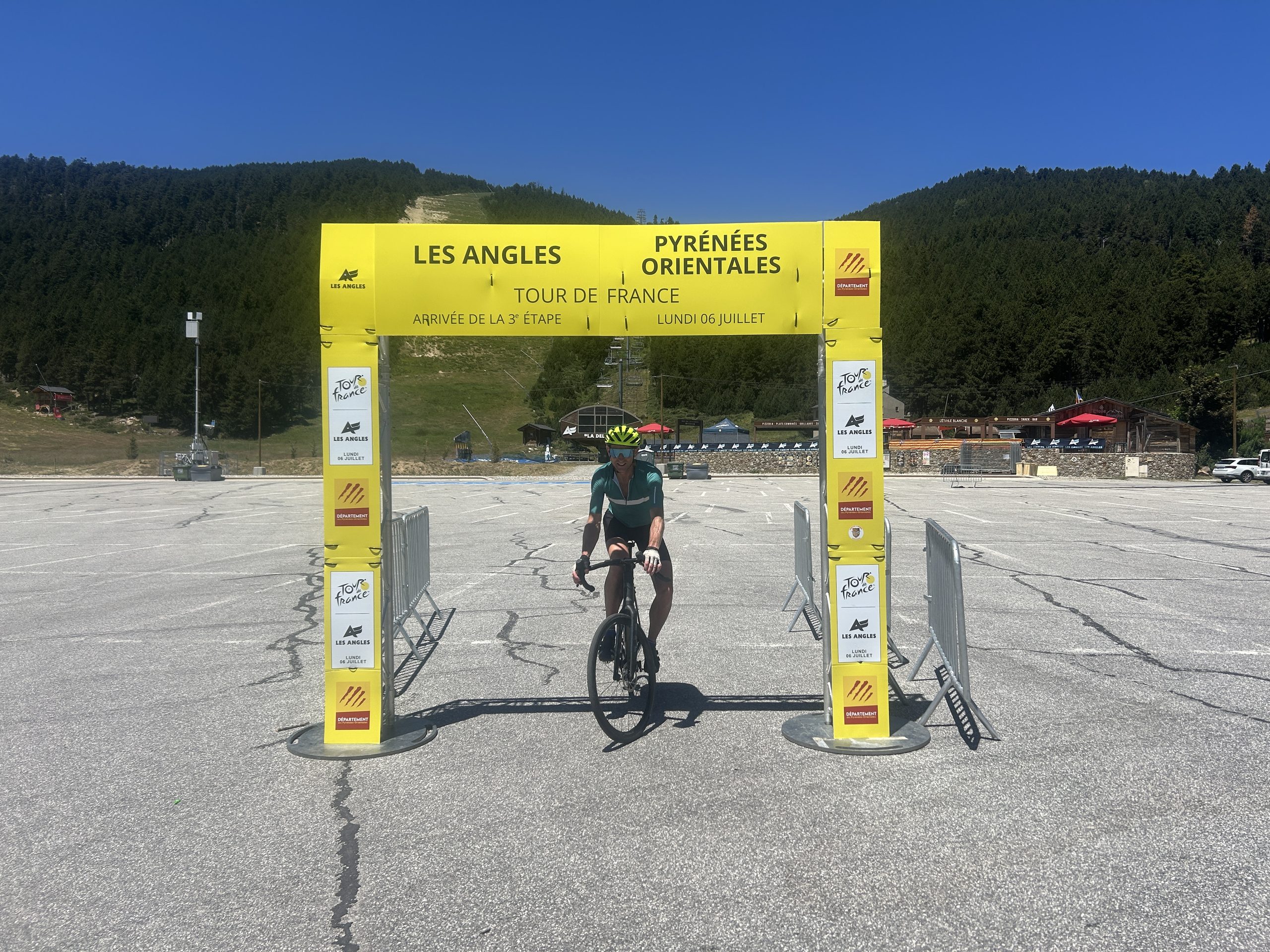
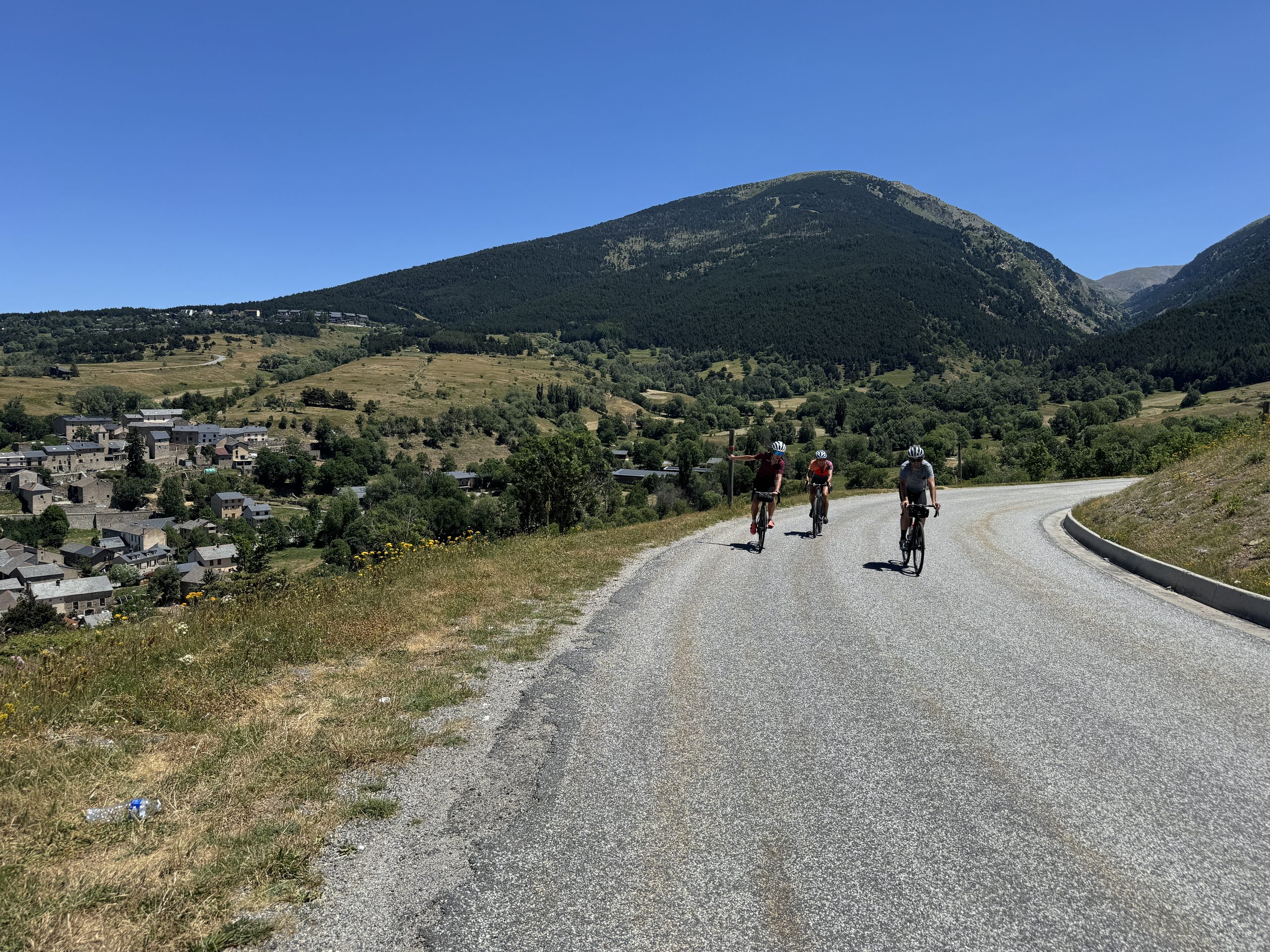
The next day, we got an even more personal connection to the race. Stage 3 would finish in the mountains and pass directly through Puigcerdà, so we rode from Gemma’s home to the finish area and back, following part of the same route the professionals would take. Our original plan was to watch the race from just across the border in France. But wildfires had broken out in the region, and French police were restricting the border crossing because additional officers were needed to help manage the fires. So our plans changed and instead, we watched the Tour from downtown Puigcerdà and that turned out to be better. We stood alongside friends, cheering as the peloton raced through streets we had ridden ourselves just a day or two earlier. It wasn’t simply watching the Tour de France. We were watching it in a place that was personal to people we care about.
Mountains, Family, and a Little Andorra
Not every day was about chasing a cycling route. We spent time hiking part of the GR11 trail system through the Pyrenees, enjoyed a wonderful family lunch with Gemma’s parents and nieces, and settled into the rhythms of mountain life. There was pintxos, fuet, manchego, tortilla, tomato bread, pastries, local wine, and more than a few long conversations that stretched well into the evening.
And then there was Andorra. One day, we crossed into the tiny mountain country to tackle Coll de la Gallina, one of the hardest climbs we’d encounter on the trip and the steepest climb in Andorra. The road rises to 1,910 meters, with an average gradient of more than eight percent and ramps that become brutally steep. Some sections approach 15 to 20 percent. In other words, it hurts. The climb also passes the Sanctuary of Canòlich, perched dramatically above the road. The sanctuary dates back centuries and has long been a destination for pilgrims who made their way up these same steep mountain slopes. We were happy to have bicycles.
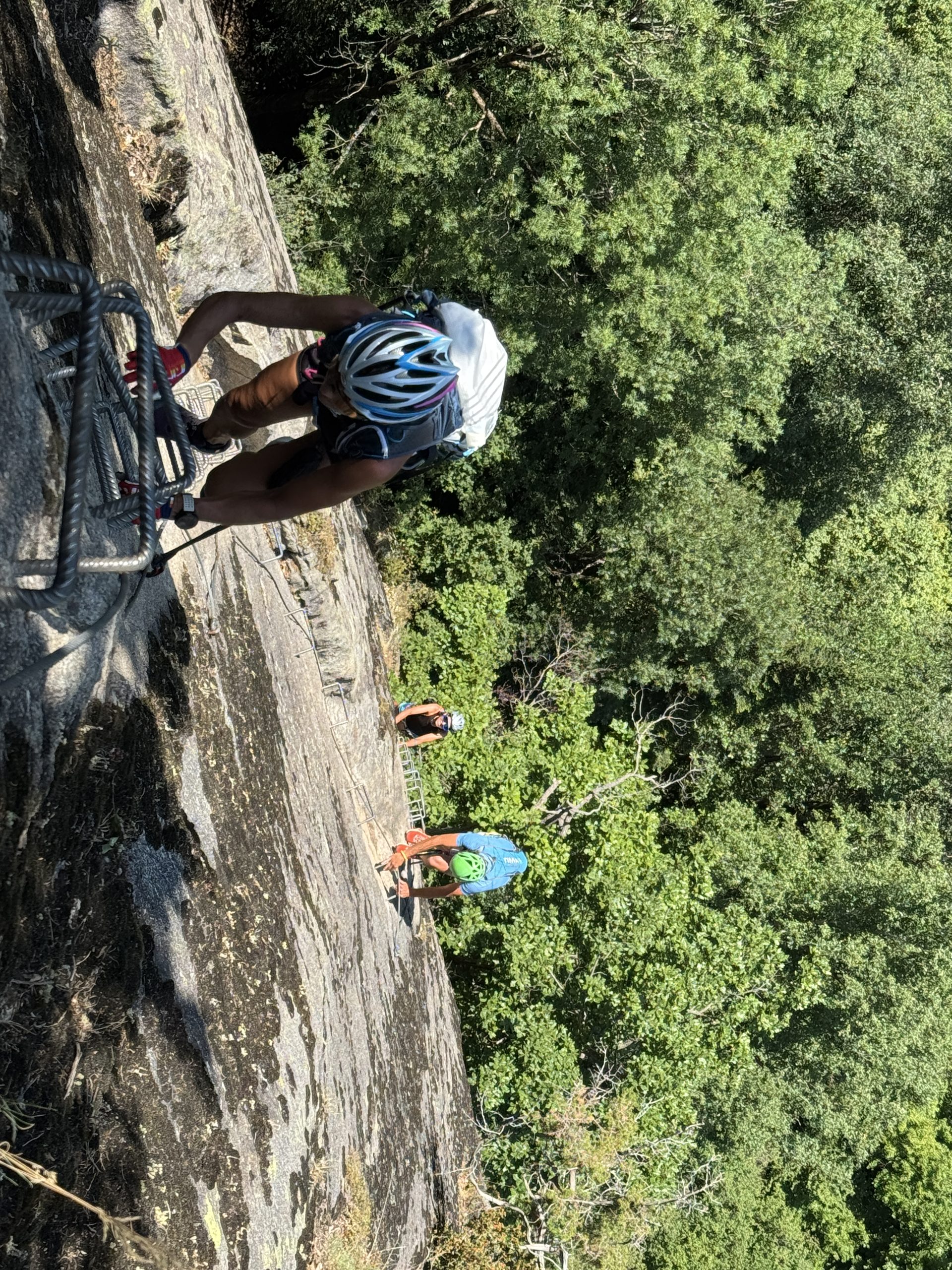
After surviving the climb, we traded our bikes for climbing gear and tackled a spectacular via ferrata high above the valley floor. It was another reminder that this trip wasn’t really about cycling alone. Every day seemed to bring something different.
Two More Days in France
From Andorra, we continued into France and spent another two days riding with John and Gemma around Ax-les-Thermes. Ax is actually home to Telemark Pyrenees which was one of the first online ski retailers and a place we would frequenly order skimo race gear when it was hard to come by in the US.
By this point, the trip had developed its own rhythm: wake up, ride, climb, descend, eat, explore, laugh, repeat. And somehow, we weren’t tired of it. If anything, the variety made the days feel like their own individual adventures. One day we were chasing a mountain pass; the next we were wandering through an old village, sharing a family meal, hiking above the valley, or sitting around a table long after dinner was finished.
What We’ll Remember
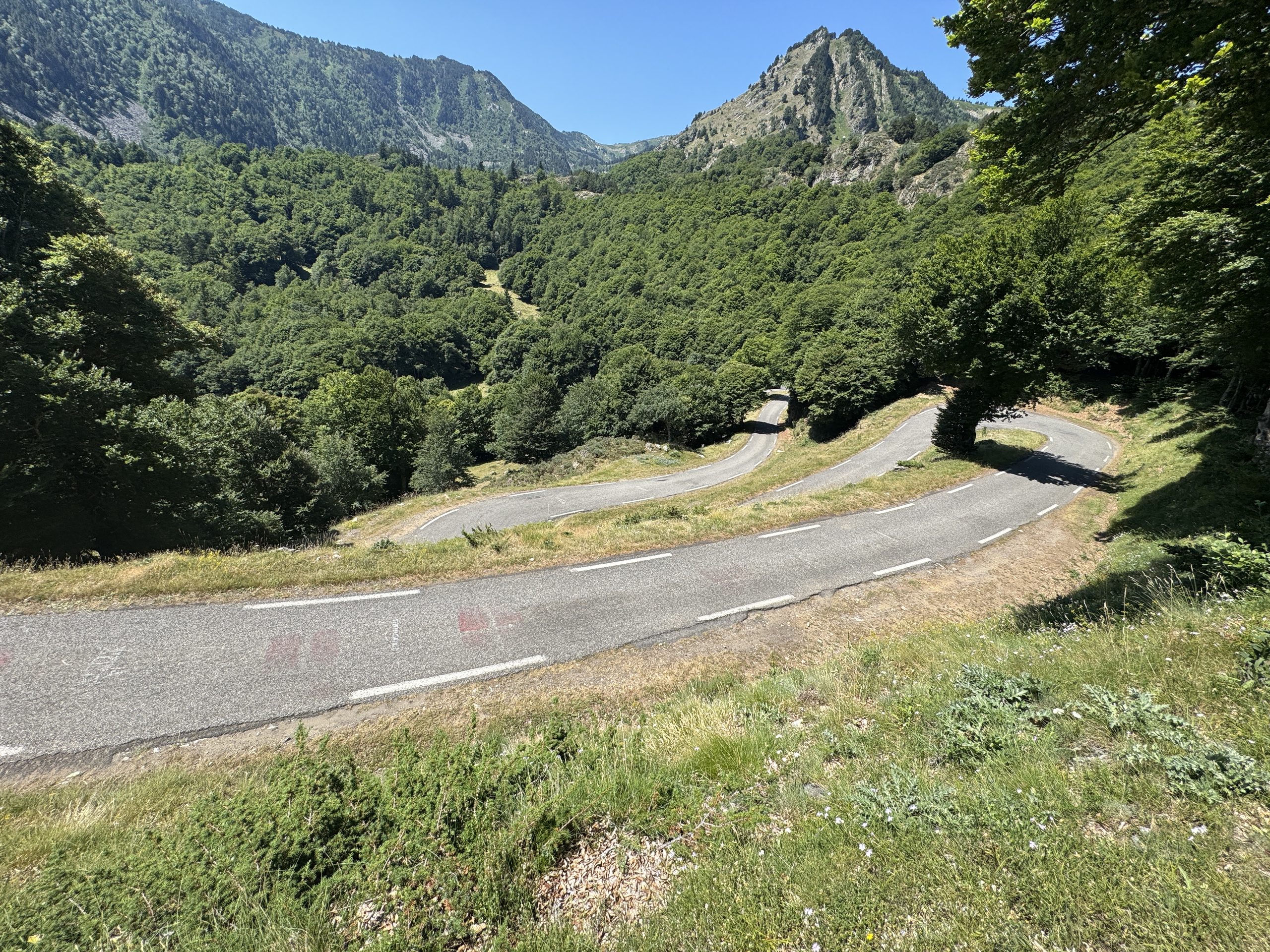
Looking back on those ten days, the famous climbs and the Tour de France are certainly part of the story.
We rode legendary Pyrenees roads in Spain and France
We suffered our way up Coll de la Gallina.
We watched professional cyclists race through Barcelona and Puigcerdà.
We remember the first afternoon in Besalú, standing in the apartment doorway with our bikes still in pieces.
We remember riding roads that only a local friend would know.
We remember long dinners, family lunches, tiny villages, medieval bridges, glasses of wine, and laughing until we couldn’t remember what we’d been laughing about.
And we remember standing together in Puigcerdà as the Tour de France came racing through a place that had already become part of our shared history.
That’s what made the trip special.
The Tour may have given us a reason to return to Catalonia with our bikes, but it was the people, the unexpected adventures, and all those small moments in between that made the ten days unforgettable.
Some trips are measured in miles. This one will be measured in memories.
Leave a Reply